Your rehabilitation journey in VAC’s Rehabilitation Services and Vocational Assistance Program helps you achieve your rehabilitation goals and make meaningful improvements in your day-to-day functioning. To support this, your Rehabilitation Service Specialist (RSS) and the clinicians involved with your care will ask you to complete outcome measures. These questionnaires help track your progress over time and provide valuable information. Outcome measures help ensure your rehabilitation plan remains personalized, relevant, and aligned with your goals.
Outcome measures are regular check-ins throughout your rehabilitation journey. They are questionnaires that ask about your experiences and how your abilities, participation in activities, and functioning are changing over time. There are no right or wrong answers.
Outcome measures allow you to share your perspective on your progress in areas like:
The information you provide helps your rehabilitation team understand what is improving, what challenges remain, and if changes to your Rehabilitation Plan may be helpful.
Completing outcome measures is meant to be simple and convenient. You'll receive an invitation to complete these questionnaires from your RSS.
Similar to visiting other clinicians involved in your care, such as a physiotherapist, your Rehabilitation Service Professional may also ask you to complete outcome measures that are relevant to your eligible health condition at various stages of your journey. They may share online links or provide this in person for your completion. If you have questions about the tool being used or need further clarification, please ask the RSS or clinician delivering it. It is their role to ensure you're fully informed about why the tool is important to help support your care.
Your responses are always handled with care and respect for your privacy.

Completing outcome measures is a powerful way to actively participate in your rehabilitation journey. By completing them, you:
Your perspective provides valuable insight into your progress, challenges, and priorities. It helps ensure your Rehabilitation Plan remains aligned with what is most important to you.
Your rehabilitation journey is a partnership between you, your VAC Case Manager, your RSS, and your rehabilitation team. The information you provide through outcome measures helps everyone work to better understand your progress, identify opportunities for improvement, and support your rehabilitation goals.
You have several options to share feedback about the services you receive while engaged in VAC’s Rehabilitation Services and Vocational Assistance Program. Your input helps us understand what’s working and what could be improved. One of the primary ways to provide feedback is through Participant Experience Check-in surveys.
These short surveys are one way for you to tell us about your rehabilitation journey. While completing them is optional, we strongly encourage all Participants to share their insights. Your responses help us gain a full, comprehensive picture of your ideas, concerns, and successes. This direct input provides insight into your experience while receiving rehabilitation services.
These surveys are designed to be straightforward and comprehensive. They consist of a series of 15-20 questions. You'll rate your level of satisfaction across ten key categories and have the opportunity to provide detailed comments.
You'll receive these surveys at three points in your rehabilitation journey:
The surveys cover various aspects of your experience, including:
The information we collect from the survey gives us a deeper understanding of your thoughts and feelings about your experience throughout your rehabilitation journey. We analyze these insights to:

We understand that feedback isn't always something that can wait for a scheduled survey. That's why we offer several ways for you to share your thoughts, ideas, or concerns at any point in your rehabilitation journey:
If you still have concerns, you can mail PCVRS at:
PCVRS
Rehabilitation Services and Vocational Assistance Program
Suite 500 – 1803 Douglas Street
Victoria, BC V8T 5C3
Your Rehabilitation Service Specialist (RSS) is your dedicated point of contact at PCVRS. Please contact them if you have any questions about the surveys, need assistance completing them, or wish to discuss any aspect of your experience. They are there to support you throughout your entire rehabilitation journey, including helping you navigate the feedback process.
Thank you for sharing your voice to strengthen the Rehabilitation Program. It truly makes a difference!
The Rehabilitation Program involves many moving parts and understanding how they all fit together is key for achieving success. Our goal is to ensure you have a clear understanding of the program and to support you in feeling confident and informed throughout your rehabilitation journey.
Veterans Affairs Canada (VAC) is the program decision maker they are responsible for determining eligibility, setting the program framework, and making all decisions about the rehabilitation services you receive. Partners in Canadian Veterans Rehabilitation Services (PCVRS), works on VAC’s behalf to coordinate and administer the program. This means that while PCVRS supports you by organizing assessments, developing your Rehabilitation Plan within VAC’s guidelines, and connecting you with qualified rehabilitation professionals, all program decisions ultimately rest with VAC. Together, these roles ensure that your rehabilitation experience is structured, consistent, and focused on your needs.
Successful rehabilitation requires team effort. Here's a breakdown of who is responsible for what:
1. Veterans Affairs Canada (VAC):
Role: VAC is the program decision maker; they set the program parameters to deliver needs based, time-limited rehabilitation services to address Veterans barriers caused by their program eligible health problems are determined by VAC.
2. Partners in Canadian Veterans Rehabilitation Services (PCVRS):
Role: PCVRS is responsible for the coordination and administration of VAC's Rehabilitation Program. We manage a national network of highly qualified Rehabilitation Service Professionals (RSPs) and Rehabilitation Service Specialists (RSSs). We conduct assessments, develop your personalized rehabilitation plan with you based on the program’s framework. We coordinate your rehabilitation services, and monitor your progress. We aim to ensure the rehabilitation services you receive are tailored to your needs and aligned with best practices.
To learn more about the roles of your Rehabilitation Service Specialist (RSS) and Rehabilitation Service Professional (RSP) see our January blog on Roles and Responsibilities in your Rehabilitation Journey
3. You, The Participant – The Heart of the Journey:
Role: You are the most important member of your rehabilitation team! Your active engagement, commitment to your rehabilitation plan, and open communication with both your VAC Case Manager and your PCVRS team are crucial. Your insights, preferences, and feedback directly impact the effectiveness of your journey. You have a voice, and we encourage you to use it.
We understand that questions can arise, and experiences can vary. Please know that your VAC Case Manager and your PCVRS team are here to support you. Don't hesitate to reach out to your VAC Case Manager or your PCVRS RSS if you have questions about your plan, your progress, or the services you are receiving.

While every Participant's path is unique, your rehabilitation journey within VAC’s Rehabilitation Program follows a structured, goal-oriented process designed for functional improvement. As we've highlighted in previous blog posts, it typically involves:
For more information on the rehabilitation journey click here.
Your feedback matters! Participant Experience Check-in surveys are sent to you by your RSS three times during your rehabilitation journey:
Participant Experience Check-in surveys consist of a series of questions in which you rate your level of satisfaction within 10 categories (timeliness, respect, accessibility, excellence, accuracy, family/ support person, collaboration, RSS service delivery, PCVRS service delivery and rehabilitation progress) and provides an opportunity to leave comments about your experience in the Rehabilitation Program. All data collected is anonymous and helps VAC understand where improvements can be made and ensure the program continues to meet the needs of Canadian Veterans. We are committed to continuous improvement and creating the best possible rehabilitation experience for you.
VAC’s Rehabilitation Services and Vocational Assistance Program is voluntary to apply to, but once you qualify, participation is required. Once you begin, your active participation in rehabilitation assessments and services becomes the most significant factor in helping you achieve your rehabilitation goals. The more you engage, the more effective your rehabilitation journey. This blog explains why participation is essential, what active involvement looks like, and how it directly supports your progress.
The Rehabilitation Program is designed to help you improve your health, function, and quality of life at home, in the community, and at work. PCVRS provides professional support, evidence‑based approaches, and structured guidance to support your rehabilitation. Progress depends on applying recommendations, practicing new skills, and communicating openly with your rehabilitation team.
Your Rehabilitation Service Professional (RSP) and Rehabilitation Service Specialist (RSS) tailor your rehabilitation plan effectively by fully understanding your needs, challenges, and goals. Your insight and participation help shape a rehabilitation plan that truly reflects your rehabilitation goals. When you are actively involved — participating in assessments and services, sharing your experiences, asking questions, and providing feedback — you help the team create a plan that supports your progress. The success of your rehabilitation is connected to your engagement, and you play a vital role in achieving the best possible outcomes.
Your rehabilitation team is committed to making participation manageable, and your Rehabilitation Service Specialist (RSS) is available at every stage to address any questions or concerns you may have.
Active participation means showing up, staying connected to the process, and taking ownership of your role in your Rehabilitation Plan. Below are the core components of what active participation looks like within VAC’s Rehabilitation Program.
1. Setting Clear and Realistic Goals
Your rehabilitation team will work with you to identify goals based on your needs. These goals shape your Rehabilitation Plan. When you take an active role in developing your plan it becomes more meaningful.
2. Asking Questions and Seeking Clarification
Knowing why each rehabilitation intervention is part of your plan can make it easier to stay committed. If anything is unclear, asking your RSP or RSS for clarification helps you to understand how and why each step supports your progress.
3. Completing Activities Between Sessions
Most progress happens outside scheduled appointments. When you practice the strategies, exercises, and skills in your daily life, you reinforce what you’ve learned and strengthen the habits that support long term improvement.
4. Providing Honest Feedback
Your team relies on your input during your rehabilitation journey. We gather this information in many ways, including outcome measures, and satisfaction surveys. Sharing what is working, what is difficult, or what has changed in your life allows your RSP and RSS to make timely and appropriate modifications. Without this information, your plan may not reflect your current needs
5. Sharing Your Needs
You know your own experience best. If something is not helpful, or if you need additional support, communicating this helps to make sure your rehabilitation journey is fully supporting your needs.
6. Attending Appointments
Attending scheduled appointments is an essential part of your rehabilitation participation. These sessions allow your RSP and RSS to support and assess your progress, adjust your goals, and provide guidance based on your current needs. We understand that life can throw curveballs and that unexpected situations may require you to change or cancel an appointment. When possible, providing at least two business days’ notice helps to manage schedules effectively, respect your team’s time, and offer those appointments to other Participants who may be waiting for support. Regular attendance, along with timely communication when plans need to change, helps maintain continuity and supports steady progress in your rehabilitation.
7. Completing outcome measures
Outcome measures are check-ins that help track how you’re doing throughout your rehabilitation. They highlight what’s improving, where challenges remain, and how your plan may need to adjust. Your honest answers help your rehabilitation team tailor your supports more effectively and they help you see your own progress over time, even the small steps that are easy to overlook.

Taking an active role in your rehabilitation journey can help you achieve better outcomes, including improvements in physical function, mental health, daily activities, and overall well‑being.
Active participation helps you:
Rehabilitation is most effective when you take an active role in the process.
Small, consistent actions, such as attending appointments, completing activities, asking questions, and sharing feedback, all contribute to meaningful progress.
If you are unsure about how to optimize your involvement, speak with your Case Manager, RSP or RSS. They can help you identify practical steps and adjust your plan to better support your engagement.
Your rehabilitation team is committed to supporting you, answering your questions, and adjusting your plan as needed. Their goal is to help you move forward in a way that is manageable, realistic, and aligned with your rehabilitation goals.
At Partners in Canadian Veterans Rehabilitation Services (PCVRS), our mission is simple: to provide Canadian Veterans with high quality, effective rehabilitation care. Navigating your rehabilitation journey can bring many questions, especially about who is delivering your care. Read more to learn why our network of Rehabilitation Service Professionals (RSPs) is uniquely positioned to support you.
PCVRS RSPs receive specialized training, work in a team based approach, and have a commitment to quality assurance.
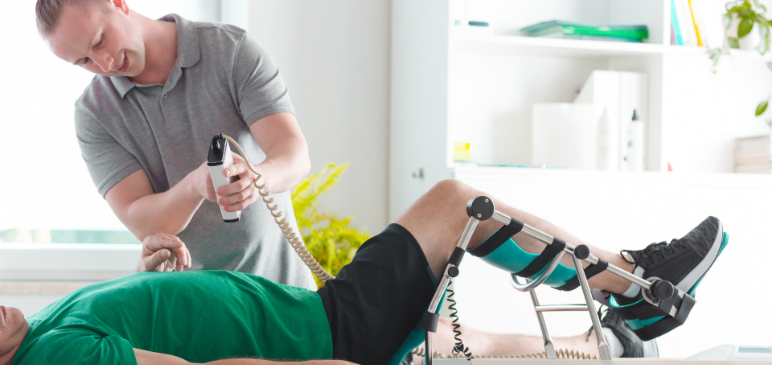
PCVRS RSPs are invested in your rehabilitation journey, bringing specialized rehabilitation knowledge and delivering services designed for your success. They are considered "best in class" because they combine professional expertise with a strong understanding of Veteran needs, providing coordinated, effective, and compassionate rehabilitation care.
We believe this integrated, specialized approach empowers you to restore function, manage symptoms, and enhance your overall quality of life.
Interested in becoming a PCVRS Rehabilitation Service Professional?
We are always growing and welcoming new RSPs to our network. If you are a dedicated rehabilitation or vocational professional eager to provide exceptional, Veteran-centric care within a supportive and collaborative network, we invite you to learn more. Please email us at providers@pcvrs.ca to express your interest.
A PCVRS Rehabilitation Service Professional (RSP) is a trained and licensed health professional. They deliver rehabilitation focused services through VAC’s Rehabilitation Services and Vocational Assistance Program (RSVP). Their job is to help you achieve your rehabilitation goals and improve how you function at home, in the community and at work.
PCVRS’ network includes a wide range of RSPs. Each brings specialized knowledge and skills to support your rehabilitation needs. Whatever your rehabilitation needs are, we have a qualified professional ready to work with you.
Our network includes:
Your RSPs are hands-on rehabilitation experts. They assess your needs, provide treatments, and share updates about your progress. They also work closely with your Rehabilitation Service Specialist (RSS) to ensure your rehabilitation plan fits your goals.
PCVRS RSPs are committed to excellent rehabilitation services for Canadian Veterans. When you work with a PCVRS RSP, you can be confident they meet the highest standards:
Here's what you can expect from a PCVRS RSP:

Your rehabilitation journey is unique, and you deserve the best possible support. PCVRS Rehabilitation Service Professionals are not just clinicians, they are skilled partners who work with you to help you reach your rehabilitation goals.
We are continually expanding our network of Rehabilitation Service Professionals. If you are a rehabilitation focused health or vocational professional interested in joining the PCVRS network and providing high quality, nationally consistent, rehabilitation focused services to Canadian Veterans please email us at providers@pcvrs.ca.
The Rehabilitation Services and Vocational Assistance Program (RSVP) is all about helping you overcome challenges caused by your service-related eligible health problems.
Think of your rehabilitation as a journey, and we're here to walk alongside you. This journey is a team effort, and you are the most important player on this team.
Let's explore your role and meet the dedicated team members who will be supporting you every step of the way.
Your active participation is key to a successful rehabilitation journey. Here’s what it means to be an active partner in your program:
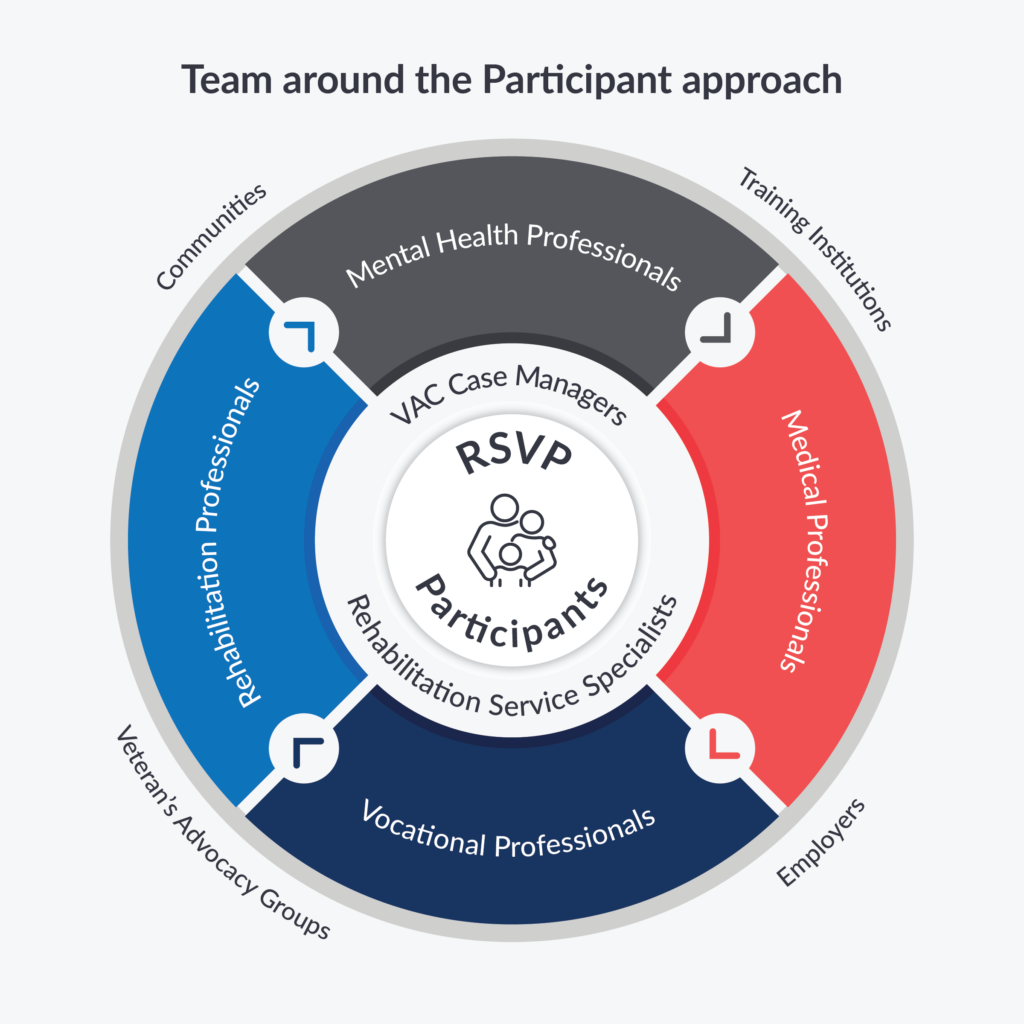
At PCVRS, we use a "Team Around the Participant" approach. This means you're never alone! You have a dedicated group of health care experts working together to support your unique journey. Let’s meet your team:
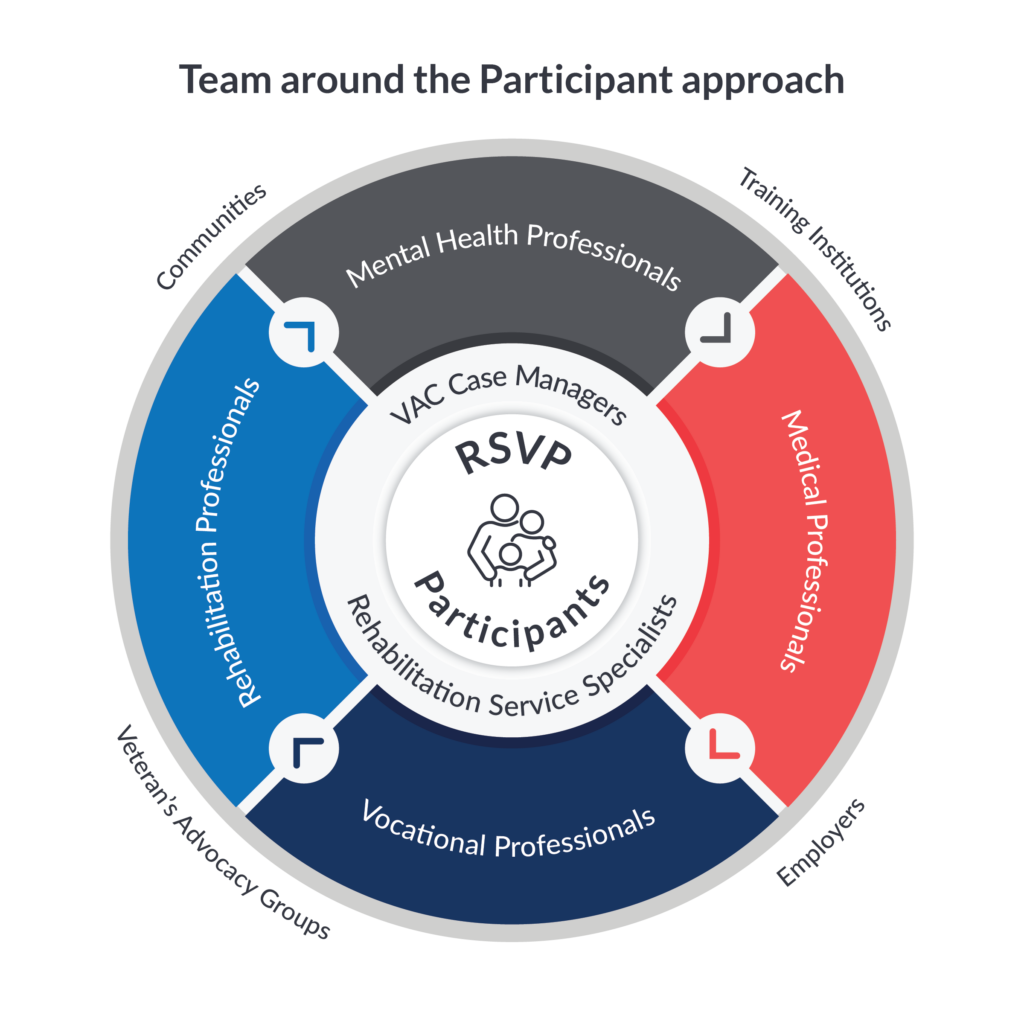
Every member of your team has a key role, but your active participation is what truly makes the difference. By working together, you, your VAC Case Manager, your RSS, and your RSPs can build a strong path forward.
Have more questions about your role or your team? Don't hesitate to reach out to your RSS or VAC Case Manager. We're here to help you every step of the way! You can also find more detailed information in your PCVRS Participant Guide.
Starting a new phase in your rehabilitation journey may bring questions, especially if you are having a functional capacity evaluation (FCE). You may wonder what it is, why it's important, and what to expect during the evaluation.
This evaluation is about understanding your ability to perform day to day tasks and work activities, so we can work with you to build a Rehabilitation Plan that supports your needs.
A functional capacity evaluation is designed to help you, and your rehabilitation team, understand what you're currently able to do for physical and functional activities.
Think of it as a “snapshot” of your physical functional abilities. It’s a way for us to see how your body is doing right now, so we can tailor your Rehabilitation Plan to meet your needs and support you in reaching your rehabilitation goals.
A functional capacity evaluation provides information about your physical functioning. This helps your rehabilitation team:
It’s also a key tool for communicating your needs to others, whether that’s with your VAC Case Manager or your overall rehabilitation team.
For you, this means no guesswork. A functional capacity evaluation helps by showing what’s reasonable, what’s achievable, and where support is most needed from a physical functional perspective.
It will be led by a specially trained PCVRS Rehabilitation Service Professional.
Here’s what you can expect:
1. Supportive Start
Your assessor will begin by explaining the purpose of the functional capacity evaluation and answering any questions you have. You’ll talk about your health history, any injuries or conditions you’re managing, and what your typical day looks like. A physical exam will then be conducted to ensure there are no safety concerns before participating in the more vigorous functional testing aspects of the assessment (lifting, carrying, pushing, pulling etc.)
2. Physical Activities
You’ll be asked to perform everyday tasks that mimic real-life activities, such as:
These activities are monitored closely, not to judge your performance, but to assess things like:
If at any point during the assessment you wish to take an extra break or stop an activity, you may do so.
3. Thoughtfully Paced
The evaluation typically takes a few hours and is broken into manageable parts, with breaks as needed.
Your safety and comfort are top priorities throughout the evaluation. Similar to any physical activity, you might experience some muscle soreness afterward, which is a normal response. Should you have any questions or concerns, please do not hesitate to contact your rehabilitation team.

4. What Happens After the Evaluation
Once it’s complete, the assessor will compile their findings into a detailed clinical report. This report helps:
The results will be reviewed with you and shared with your rehabilitation team to ensure everyone is working with the same information to support you best.
A functional capacity evaluation is a crucial tool that ensures your Rehabilitation Plan is based on your demonstrated physical functioning. Each rehabilitation journey is unique and tailored to meet your specific goals.
Whether you're returning to work, adjusting your daily activities, or want to feel more confident in your physical abilities, this evaluation is a supportive step toward those goals.
At Partners in Canadian Veterans Rehabilitation Services (PCVRS), we believe your rehabilitation services should be coordinated, supportive, and clear.
That’s why we start with an interprofessional assessment to determine your holistic rehabilitation needs. In an interprofessional assessment, you will meet with multiple Rehabilitation Service Professionals (RSPs) to get a complete picture of your current health, abilities, and goals. It may include multiple appointments over one or two days depending on the availability of RSPs, your needs, and schedule.
An interprofessional assessment is when members of your rehabilitation team such as an occupational therapist, physiotherapist, psychologist, and physician work together to assess your rehabilitation needs. This can occur in person, virtually or a mix of both.
With an interprofessional approach, your RSPs work together in a way that fully supports you. Your RSP team collaborates directly with each other, bringing their rehabilitation expertise together to form a Rehabilitation Plan that addresses your needs. It simplifies your rehabilitation journey, making it easier to see how every recommendation and service fits into your Rehabilitation Plan.
Everyone - including you - works together to understand your needs and improve your functioning at home, in the community and at work.
An interprofessional assessment identifies the most accurate and well-rounded understanding of your rehabilitation needs.
An interprofessional assessment helps:
For you, this means a smoother process, fewer appointments, and a Rehabilitation Plan that’s realistic, personalized, and aligned with your goals.

Your assessment is unique to you and your eligible health problems. Interprofessional assessments can occur over one or two days. This will depend on availability and your tolerance. Interprofessional assessments are typically held in a comfortable clinic setting, virtually, or a hybrid model.
Here’s an idea of what you can expect:
1. Welcome and Introduction
You’ll be introduced to your team, which may include multiple RSPs. They will explain what to expect during the assessment and answer any questions you may have.
2. Interviews and Conversations
Each RSP will ask you about your health history, current challenges, lifestyle, and personal goals related to the services they provide. This is your time to share what matters most to you, whether it's returning to work, being more active with your family, or managing day-to-day tasks more easily.
3. Hands-On Assessments
Depending on your needs, you may be asked to:
The RSPs will observe and take notes to understand your abilities in a real and practical way.
4. Team Collaboration
Then, your rehabilitation team will consult with each other on the best approach for your rehabilitation focused care. They’ll look at the whole picture, not just individual symptoms, and consider how everything fits together.
After your assessment, your RSS will develop a personalized Rehabilitation Plan. They'll review it with you to ensure you understand and are comfortable with the approach.
After your interprofessional assessment, the team will put together a detailed report that outlines:
Your health and quality of life deserve a team approach, one that includes rehabilitation experts who listen and work together to support you. An interprofessional assessment is a foundation for your rehabilitation progress. Whether you're just starting out or adjusting your current Rehabilitation Plan, an interprofessional assessment helps make sure that everyone is on the same page, including you.
A team of dedicated Rehabilitation Service Professionals will support you in your rehabilitation journey. Depending on your needs, your team may include an occupational therapist (OT). An OT can help you build routines, adapt day to day tasks, and use tools to help make life easier and more fulfilling.
If you’ve been referred for an occupational therapy assessment, you might be wondering: What exactly is occupational therapy? What will happen at my appointments? How will this help me in my everyday life?
At Partners in Canadian Veteran Rehabilitation Services) (PCVRS), we’re here to provide clear guidance and support every step of the way. In this blog, we'll shine a light on occupational therapy and explore how it can play a pivotal role in supporting your rehabilitation goals.
Occupational therapy is a type of rehabilitation that helps you participate in things that are meaningful and necessary for daily life. These can include things like self-care, work, hobbies, household routines, or simply feeling like you again. The goal of occupational therapy is to improve or maintain independence, increase your quality of life and support your overall wellbeing.
Occupational therapists bring a unique perspective to the rehabilitation process. They are trained to support you as a whole. This means an understanding of the physical, cognitive, and emotional aspects of your injury or illness.
PCVRS occupational therapists are trained and accredited professionals. They work with you to accomplish your rehabilitation goals. They listen to your story, identify how your eligible health problems impact your day-to-day life, and help support a Rehabilitation Plan that’s built around your goals.
With their whole-person approach, occupational therapists work to figure out why you cannot do something you need or want to do and recommend services to support your rehabilitation goals.
An occupational therapy assessment may evaluate your:
You and the occupational therapist will begin by talking about what your life looks like now. You will discuss how they can best support you in reaching your rehabilitation goals.
Here’s what you can expect:
1. A warm introduction
Your occupational therapist will introduce themselves and explain what they do. You’ll have a chance to share anything you’re comfortable with about your background, health, and life after service.
2. Understanding your rehabilitation goals
Your occupational therapist will ask about your rehabilitation goals, your abilities and the activities you’re finding difficult.
3. A look at daily life
You might talk about how you're managing at home, in the community, or at work. The occupational therapist may ask questions like:
This gives them an idea of what’s working and where support is needed.
4. Finding the right support
If needed, your occupational therapist might observe how you do certain everyday tasks (like standing, walking, or lifting light objects). This helps them identify strategies or tools that could help make things easier or safer.

5. Next steps
By the end of the assessment, your occupational therapist will talk through some possible next steps. That could include:
We believe that rehabilitation isn’t one-size-fits-all. Our occupational therapists will meet you where you are and work with you to reach your rehabilitation goals.
Your occupational therapy assessment is just a starting point but it’s one that can open the door to a better, more manageable, day-to-day life.
Reach out to your PCVRS Rehabilitation Service Specialist (RSS) or VAC Case Manager, they are there to help.
Starting something new, especially when it comes to your health, can bring a lot of questions. At Partners in Canadian Veterans Rehabilitation Services (PCVRS), we understand that and want to make every step of your rehabilitation journey as clear, supportive, and empowering as possible.
If you’ve been referred for physiotherapy rehabilitation services, you might be wondering: What does a physiotherapist do? What will they ask me to do?
Physiotherapy helps improve how your body moves, feels, and functions. Physiotherapy is about helping you rebuild strength, mobility, and confidence in your movements. Physiotherapy helps improve your function at home, in the community and at work.
You’ll work with a trained professional who understands what your body has been through, and knows how to help you move towards your functional goals within safe limits.
The first appointment is mostly a learning session. Your physiotherapist will learn about your history, your treatment so far, your body, your goals, and your challenges. This is a starting point in reaching your rehabilitation goals.
Here’s what you can expect:
1. A Friendly Welcome:
Your physiotherapist will introduce themselves and explain how physiotherapy can support your rehabilitation journey. With your consent, they’ll ask about your medical history, service-related injuries, and how your health problem impacts your function.
2. A Discussion About Your Goals:
What do you want to get back to? Maybe it’s returning to work, walking further distances, lifting your kids or grandkids so you can do more with your family, or engaging in community sports. Your physiotherapist will work with you to help you reach your rehabilitation goals.
3. A Physical Assessment:
Your physiotherapist may look at things like:
Your physiotherapist will guide you every step of the way and explain the purpose of their testing and questions. This is all about understanding your current functional abilities so your physiotherapist can tailor your rehabilitation services to help you achieve the goals outlined in your Rehabilitation Plan.
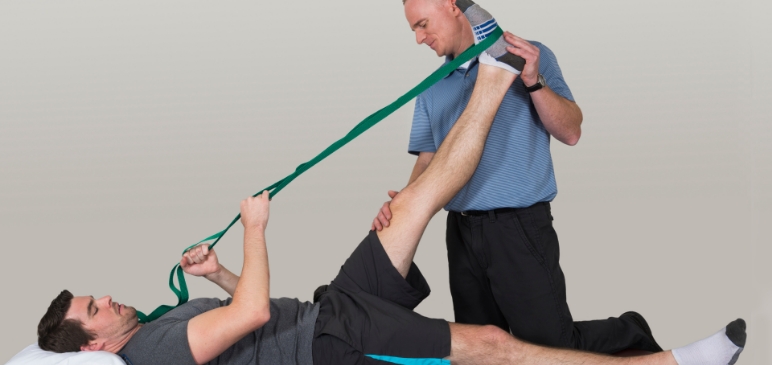
4. Education and strategies for self-management:
Sometimes physiotherapists use manual therapy techniques like gentle joint mobilizations or soft tissue work to help improve your function. If this is recommended, they’ll always explain it first and check in with your comfort level.
5. A personalized plan:
By the end of the session, your physiotherapist will go over what they’ve learned and what the next steps might look like. That could include:
At PCVRS, we’re here to support you in your rehabilitation journey.
Physiotherapy is not just about getting stronger, it’s about regaining freedom, control, and confidence in your body again. And it all starts with that first appointment.
PCVRS supports Veterans in the Rehabilitation Services and Vocational Assistance Program (RSVP) to deliver the best support, we consider each Veteran’s unique background, experience, and needs. Women Veterans have served Canada with dedication and courage, and PCVRS is dedicated to providing comprehensive and compassionate support to help them thrive as they transition to life after service.
We're proud that our team of rehabilitation service specialists and professionals includes dedicated women, who bring a valuable point of view to RSVP. Our diverse teams enhance the quality of care and support we offer. It helps ensure that women Veterans, and others, feel understood, respected, and empowered.
At PCVRS, we understand rehabilitation is deeply personal. That's why we use a holistic approach. We look at all aspects of your well-being―physical, mental, and emotional and go beyond treating symptoms to focus on your overall rehabilitation needs and resilience.
Each Participant has unique rehabilitation needs and goals. You may want to regain strength, manage pain, overcome a mental health challenge, or develop new skills for employment. We work with you to create a Rehabilitation Plan that’s tailored to you.
A cornerstone of our approach is to meet Veterans ‘where they are’. We understand that fitting rehabilitation into your life may be hard because of family responsibilities or other commitments. We work closely with each Participant to develop a plan that integrates into your life so you can actively participate.
We're committed to making the program accessible, effective, and empowering for everyone and supporting you with appointment times that fit with your schedule. Virtual sessions may be easier to attend if you live in a remote area or have mobility challenges. We tailor our approach so you can actively participate and get the most from your Rehabilitation Plan.
“Veterans Affairs Canada (VAC) Rehabilitation Services and Vocational Assistance Program (Rehabilitation Program) saved my life, and I am grateful for the empowering opportunities afforded to me in successfully navigating my Military-to-Civilian Transition (MCT). With support from VAC and a case manager who championed my autonomy, I am forever grateful for the clarity and strength that emerged as I began to realize my sense of purpose post-service and regained my sense of dignity.”
—PCVRS Woman Participant Testimonial
At PCVRS, we are committed to providing every Veteran with the respect, care, and support they deserve as they work toward their rehabilitation goals. For women Veterans, we recognize the importance of addressing their unique needs. Every journey is different, but our commitment remains the same: to provide Veterans with unwavering support on their rehabilitation journey.
Assessments are among the first steps in your rehabilitation journey with PCVRS. After you meet your Rehabilitation Service Specialist (RSS), get an overview of the program, you have the assessments to identify your needs. From these assessments, rehabilitation goals and required services are identified. If you have an eligible mental health problem, you may be referred to a mental health professional for a psychological assessment. In this blog, we explore psychological assessments, what happens during an assessment, and what they are used for.
Dr. Sylvie Bourgeois is the Medical Director of Psychology and Mental Health at PCVRS. We asked Dr. Bourgeois, a Ph.D. psychologist with nearly twenty years experience, why psychological assessments are so important.
“The rehabilitation focused psychological assessment, assesses the Participant’s current
ability regarding their activities of daily living, family life, and community. It focuses on
how the symptoms of eligible mental health problems impact everyday functioning. The psychological assessment aims to identify what types of psycho-social rehabilitation services may improve a Participant’s ability to function at home, in the community, and at work.”
Dr. Bourgeois explains that a psychological assessment can:
“The rehabilitation assessment process is designed to be participant-centered,” she adds. “It considers where the Participant is in their rehabilitation journey. Our Rehabilitation Service Professionals make sure Participants understand the intent and purpose of the assessment and are there to answer any questions.”

The psychological assessment is part of a step-by-step process. Here’s how it works:
1. Initial Consultation: You will meet with a psychologist or a member of the PCVRS mental health team to discuss your background, challenges, and goals. You’ll also review consent forms and talk about how PCVRS protects your privacy.
2. Assessment Activities: You may be asked to complete questionnaires, interviews, or activities. An assessment may take three or four hours but will vary depending on your needs. An assessment typically takes place over two sessions.
3. Feedback Session: A Rehabilitation Service Professional (RSP) will discuss the results of the assessment with you and explain how the Rehabilitation Service Specialist (RSS) will use the assessment results to determine which rehabilitation services may be included in your Rehabilitation Plan.
4. Rehabilitation Plan Created: The RSS will receive the assessment report and use it to determine if there are rehabilitation needs that should be addressed in a Rehabilitation Plan. If there are, they’ll work with you and your VAC Case Manager to create a Rehabilitation Plan with goals and milestones.
5. Collaborative Planning: Once the VAC Case Manager approves the Rehabilitation Plan, you will collaborate with your RSS, RSPs, and VAC Case Manager to meet your rehabilitation goals.
Starting a rehabilitation journey can bring a lot of questions. We’re here to help. Before each assessment, we provide an appointment package, so you know what to expect and how to prepare. Our goal is to make the process as smooth as possible.
At PCVRS, we are committed to providing supportive and effective rehabilitation services. Psychological assessments are a vital part of that commitment, helping us to identify your potential for improved functioning in everyday life, and support in the rehabilitation journey. We encourage you to ask your rehabilitation team if you have any questions about your rehabilitation journey.
Trauma-informed care is used to describe PCVRS’ approach when working with Veterans who have experienced trauma. PCVRS provides a Participant-centric approach that is culturally sensitive, respectful of diversity, and a trauma-informed. This approach isn’t just a rehabilitation model, it’s a philosophy of care that recognizes the unique experiences of Veterans and promotes a climate of collaboration, safety and empowerment. It aligns with our “Team around the Participant Approach” and how we work with you through every phase of your rehabilitation.
With PCVRS, the focus is on you, the Participant. Trauma-informed care ensures that our team of providers, your Rehabilitation Service Specialist (RSS) and your VAC Case Manager walk beside you, not just as the rehabilitation team, but as allies in your rehabilitation journey.
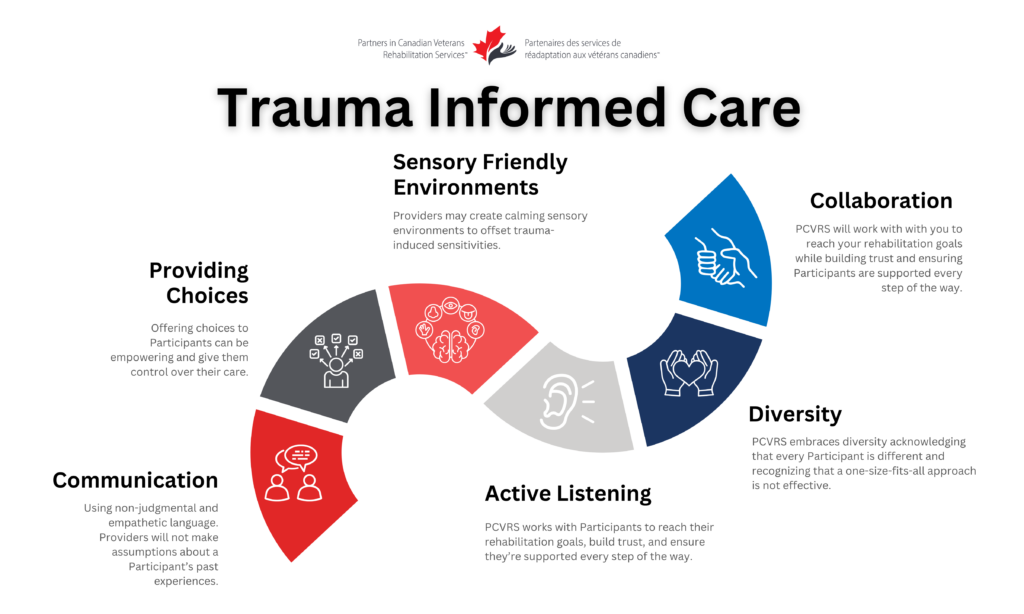
The trauma-informed model is evidence-informed and grounded in neuroscience, psychology, and Veteran-centred research. It enhances your rehabilitation journey by:
Rehabilitation is not a passive process:
At PCVRS, trauma-informed care is more than a best practice, it’s a commitment. A commitment to see you as a whole person. A commitment to provide care that is respectful and empowering.
Now, let us help support your rehabilitation, with care that understands where you’ve been and where you want to go.
Every stage of Veterans Affairs Canada's (VAC) Rehabilitation Services and Vocational Assistance Program (RSVP) is designed to help Participants achieve their rehabilitation goals. At Partners in Canadian Veterans Rehabilitation Services (PCVRS), we aim to improve rehabilitation outcomes by establishing realistic rehabilitation goals with the Participant that build on their abilities, interests, and strengths.
Every rehabilitation journey is unique, so the duration of a Rehabilitation Plan, the type of services recommended, and the number of sessions will vary based on individual needs. Some Participants may require in-clinic sessions, while others may benefit from a virtual setting and home exercise plan.
No matter what a Participant’s Rehabilitation Plan looks like, our focus is the continual improvement of their eligible health problem. We provide the support system necessary for Participants to focus on their medical, psychosocial and vocational rehabilitation goals.
PCVRS uses standardized reporting to measure and evaluate rehabilitation progress making sure Participants have the support they need to reach their rehabilitation goals. A Rehabilitation Plan is complete when a Participant achieves or mostly achieves their rehabilitation goals or no further improvement is anticipated. Participants have the opportunity to discuss their file with their Rehabilitation Service Specialist (RSS) and VAC Case Manager before it is closed.
PCVRS supports Participants’ rehabilitation needs and is dedicated to providing Participants with the resources they need when reaching the end of their Rehabilitation Plan. After a Participant’s Rehabilitation Plan is completed, they will continue to have access to a range of tools and resources on the PCVRS Participant Portal such as the Participant Training Centre. It provides access to a large catalogue of free, self-directed courses on professional and personal development topics and is available for up to one year after the Rehabilitation Program ends.
If a Participant needs ongoing treatment for chronic conditions or to maintain their current level of function, their VAC Case Manager can support them. If you are an RSVP Participant please speak to your VAC Case Manager to discuss additional services and benefits offered through VAC.
The goal of Veterans Affairs Canada’s (VAC’s) Rehabilitation Services and Vocational Assistance Program (RSVP) is to improve your life at home, in your community, and at work. To support you in reaching your rehabilitation goals, Partners in Canadian Veterans Rehabilitation Services (PCVRS) delivers rehabilitation services for a specific period of time based on your unique needs. Rehabilitation services address barriers that are impacting your re-establishment to life after service.
Intervention begins after your rehabilitation needs have been assessed and your Rehabilitation Plan has been developed. Your Rehabilitation Service Specialist (RSS) will coordinate rehabilitation services to meet your rehabilitation needs. These services will be specific to the rehabilitation goals that you have discussed with your RSS and VAC Case Manager and may include services provided by medical, psycho-social or vocational Rehabilitation Service Professionals (RSPs). Your rehabilitation services will be scheduled either in-person, virtually, or possibly a combination of the two, depending on your needs and the availability of the service.
During the Intervention Phase, your “Team” of RSPs as well as your RSS and VAC Case Manager will support you and your active participation in your Rehabilitation Plan. This includes preparing you for upcoming appointments, discussing your progress, and in some cases, adjusting your Rehabilitation Plan based on your needs.
Each Rehabilitation Plan is personalized and includes specific rehabilitation goals, called SMART goals defined as:
The goals in your Rehabilitation Plan are set to help you and your rehabilitation team monitor your progress, track your successes and make adjustments to support you in achieving your goals. This approach is supported by Veteran-focused research in the Journal of General Internal Medicine (2021) that assessed the complex needs of Veterans and recommended Participant-centered goals that focused on specific functional health outcomes.
Occupational Therapists (OTs) can help you overcome physical or mental health barriers that impact your ability to do the activities you want to do, need to do, or are expected to do in your daily life. OTs help you identify activities that are meaningful to you and break them down into smaller tasks to help you can gain independence.
For example, a Participant may experience social anxiety due to their PTSD resulting in them avoiding crowds or working in groups. OT services may be delivered to help the Participant achieve their goals by initially having them meeting in small, quiet environments then gradually increasing, over time, to larger, public spaces. By working with OTs Participants can also learn coping strategies such as breathing exercises or mindfulness techniques to help improve relaxation, concentration and attention span within these environments.
The Intervention Phase is where the rehabilitation work occurs and where you should start to see progress. Your hard work and dedication will set you up for success.
As we enter a new phase in healthcare, rehabilitation services are changing to meet the specific needs of Canadian Veterans. Partners in Canadian Veterans Rehabilitation Services (PCVRS) is leading this transformation, using advanced technologies to improve the rehabilitation process. In this blog post, we will explore the importance of Virtual Care and how it can contribute to your rehabilitation.
Accessibility Beyond Boundaries
With virtual care, Veterans can access important rehabilitation support no matter where they live. Whether you're in a small town or big city, PCVRS uses online platforms to bring rehabilitation services right to you.
Personalized Rehabilitation Plans:
Every journey is unique, and PCVRS knows how important it is to create a rehabilitation plan that will fit individual needs. With your health care providers help, you might decide that virtual care is an option that works for you. Using online tools, you can benefit from personalized sessions that focus on your specific challenges, making the rehabilitation process more accessible.
Our virtual care platform seamlessly integrates vocational rehabilitation services, empowering individuals to reclaim their professional pursuits from the comfort of their own space. Whether navigating career transitions or seeking specialized guidance, our virtual care approach ensures personalized and effective support to enhance occupational well-being.
Enhanced Support:

Rehabilitation is not just physical; it also helps with career planning and mental and emotional well-being. Our virtual care platform includes vocational rehabilitation services and mental health support, as part of the rehabilitation process. Through online counseling, Veterans can address their vocational and mental health needs.
Safety and Comfort:
Virtual care focuses on keeping you safe and comfortable. By participating in virtual sessions, you can do rehabilitation activities right from your home, meaning less stress and time spent travelling or figuring out unfamiliar spaces. This helps create a relaxed experience and helps with better rehabilitation results.
Real-time Progress Tracking:
PCVRS uses advanced technology to monitor your progress in real-time. Virtual platforms make communication between Veterans and rehabilitation professionals easy, so changes to your rehabilitation plan can happen quickly if your needs change. This approach ensures that your rehabilitation journey is always on track.
Community Engagement:
PCVRS understands the importance of a team around the participant approach through the rehabilitation process and actively promotes teamwork using virtual care.
In the world of rehabilitation, adding virtual care is a game-changer. PCVRS is committed to using these innovative approaches to provide accessible, personalized, and comprehensive support to Veterans across the country. We hope you embrace the future of rehabilitation with PCVRS, where virtual services not only bridge gaps but also create a more connected, efficient, and successful rehabilitation process. Your path to recovery is evolving – let PCVRS help you succeed.
Canadian soldiers are used to facing challenges. But after releasing from the military, they can face new challenges they may not have encountered before. This is especially true for their mental health.
Partners in Canadian Veterans Rehabilitation Services (PCVRS) is dedicated to getting Veterans the mental health support they need. We are a leader in providing Veteran-centered, specialized care for mental health and well-being.
PCVRS is committed to providing tailored treatment and rehabilitation interventions that address your mental health needs. We aim to empower you. Our ''abilities'' focused approach emphasizes your strengths, rather than focusing on your limitations or challenges. This way, we help you develop coping strategies that build from your own skills and strengths. Here are some other key benefits of our approach that set PCVRS apart:
Holistic Approach:
We understand that mental health is complex. Our rehabilitation services encompass a holistic approach. We consider everything that affects your situation—psychological, social, emotional, and physical well-being—to help you succeed.
Experienced, Interdisciplinary Team:
Our team includes experienced mental health professionals, who work with other healthcare providers, like occupational therapists, social workers, and physicians. Our service providers are accredited professionals with the expertise to help you reach your goals.
Knowledge of Veteran Culture

Our clinicians are trained to understand military culture when working with Veterans. This, combined with their clinical expertise, ensures a supportive and understanding environment when seeking help. We respect and value the perspectives Veterans bring.
Navigating the world of mental health services can be daunting. At PCVRS, we strive to make the process seamless, compassionate, and tailored to the unique needs of each Veteran. Here’s what you can expect from us:
Comprehensive Assessment:
You will begin your rehabilitation journey with a comprehensive assessment. This step allows our professionals to understand your unique needs, challenges, and strengths. This lets us develop a personalized rehabilitation plan for you.
Specialized Programs:
We offer different types of support for mental health, social, and job rehabilitation. Your path depends on the level and complexity of your needs.
Collaborative Goal Setting:
You are an active participant in your rehabilitation. Through collaborative goal-setting sessions, we work with you to set achievable milestones and objectives. Your rehabilitation plan is built on what you want to achieve.
Evidence-Based Interventions:
We use proven, evidence-based methods to treat mental health issues. From traditional therapeutic approaches, to cutting-edge techniques, we tailor our interventions to get the best outcomes for you.
Partners in Canadian Veterans Rehabilitation Services (PCVRS) is your ally in the journey to better mental health. With a holistic approach, personalized programs, and a knowledgeable team ready to help you, PCVRS can provide the resources and support to reach your rehabilitation goals. In the face of mental health challenges, PCVRS is here to say, "You are not alone on your journey to healing."
If you need emergency help, please call 911, visit your local emergency department, or call the 988 Suicide Helpline.

General Program Information
About the Rehabilitation ProgramRehabilitation teamRehabilitation journeyGBA PlusFAQFor Businesses
Hiring a VeteranPartners in Canadian Veterans Rehabilitation Services
Rehabilitation Services and Vocational Assistance Program