
November 1, 2023
In the world of healthcare, one truth remains constant: every Participant is unique, and so are their needs for rehabilitation and recovery. When it comes to addressing the diverse challenges faced by Participants in the PCVRS (Partners in Canadian Veterans Rehabilitation Services) program, a one-size-fits-all approach simply won't suffice. That's where the transformative concept of interdisciplinary rehabilitation steps in, offering a tailored and multi-level approach that has the potential to change lives.
Interdisciplinary rehabilitation care involves a team of rehabilitation professionals from different disciplines working together to provide comprehensive care for a Participant. This approach to rehabilitation is efficient due to its ability to provide care that addresses the physical, emotional, and social needs of a Participant. The rehabilitation team may include physicians, physical therapists, occupational therapists, and more. The goal of interdisciplinary rehabilitation care is to help Participants achieve optimal health and functioning and improve their quality of life. In this blog, we will discuss the benefits of interdisciplinary rehabilitation care and how it can help Participants recover faster and more effectively.
Our interdisciplinary approach:
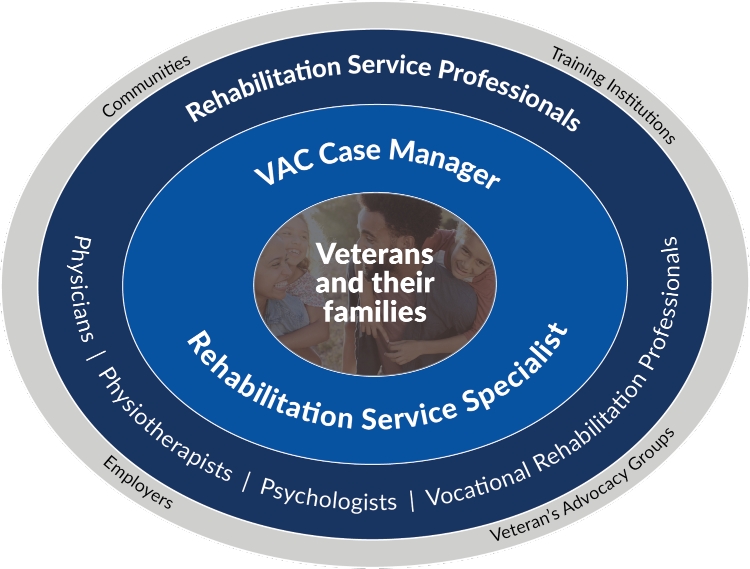
Now that we have introduced the concept of interdisciplinary rehabilitation and its pivotal role in the PCVRS program, let us dive deeper into its practical application through a real-life case study:
Meet Patrick, a PCVRS Participant who experiences the benefits of Interdisciplinary care (IDC). We'll closely examine how the collaborative efforts of healthcare professionals from various disciplines tailored a comprehensive care plan to meet his unique needs, helping Patrick reach his rehabilitation goals.
Patrick has chronic neck and shoulder pain after falling 3 years ago during active duty. Through conversations with his Veterans Affairs Canada Case Manager and PCVRS Rehabilitation Service Specialist, he was recently referred for and participated in a comprehensive, interdisciplinary assessment with a Physiotherapist, MD, and Psychologist. The assessment team recommended that an "Interdisciplinary Care" plan would be the best next step to address his on-going challenges.
IDC is helpful when there is persistent pain, a person has multiple issues, and especially for people like Patrick, whose injury and pain have impacted far more than just their body. IDC takes a team-around-the-Participant approach. The team begins with the patient and their support network and will be comprised of 2 or more diverse types of health professionals, commonly including a physiotherapist, occupational therapist, kinesiologist, psychologist, and a medical doctor. The greatest benefits of this type of care are that it offers a collaborative approach to treatment, leverages different skills of the clinicians toward achieving common goals, and empowers the patient to be an active and equal participant in their recovery journey. This can improve care, increase success of treatment, and help overcome barriers to recovery that may have previously felt overwhelming. IDC has become the gold standard in the treatment of people with persistent pain, mental health, and addiction.
Patrick and his team work together to create common goals. They integrate and meld their skills and approaches to attain the best possible outcomes. For example, Patrick’s psychologist may suggest an approach to accommodate his anxiety that is adopted by all team members, or the rehabilitation team may make modifications to their plans to reduce flare-ups caused by specific movements.
An interdisciplinary care approach to rehabilitation integrates the strengths of different clinicians to support a Participant’s achievement of their goals. Together, this can help Participants like Patrick progress towards greater freedom of movement, with less pain, and improve their quality of life.

September 16th, 2026
Rehabilitation is a personal journey. Understanding how the process works can make it easier to navigate. At PCVRS (Partners in Canadian Veterans Rehabilitation Services), we are committed to supporting you as you work toward your rehabilitation goals and improved well-being.

August 14th, 2026
Your rehabilitation journey in VAC’s Rehabilitation Services and Vocational Assistance Program helps you achieve your rehabilitation goals and make meaningful improvements in your day-to-day functioning.

July 13th, 2026
You have several options to share feedback about the services you receive while engaged in VAC’s Rehabilitation Services and Vocational Assistance Program. Your input helps us understand what’s working and what could be improved. One of the primary ways to provide feedback is through Participant Experience Check-in surveys.

General Program Information
About the Rehabilitation ProgramRehabilitation teamRehabilitation journeyGBA PlusFAQFor Businesses
Hiring a VeteranPartners in Canadian Veterans Rehabilitation Services
Rehabilitation Services and Vocational Assistance Program